
Many promises are based on commitments. Here’s a good example: “You whom I have upheld since your birth, and have carried since you were born. Even to your old age and grey hairs, I am He, I will sustain you” (Isaiah 46:3b-4a). With a promise or a commitment, only one party is involved. However, when a covenant is made, it always happens between two parties, and in the presence of witnesses. It is like a treaty that two national leaders sign after a war, with each nation’s military leader standing as a witness.
But have you ever noticed that when God made a covenant with His people, God alone made the covenant? God made the covenant with Himself. Genesis 15 is a good example. God made a promise to Abraham (then still Abram), but Abraham wanted proof. After all, Abraham wouldn’t live forever—how could he know that God would remain faithful? So God made a covenant with Abraham. But how can the creature make a covenant with the Creator? That is why God put Abraham to sleep, and God alone moved between the torches and the burnt offerings. The covenant was sealed, and God was His own witness.
However, there are always implications when a covenant is made. God’s people may claim God’s care, but God may, therefore, claim the people’s obedience. In essence, that’s all the Ten Commandments were: If you (command), then I will (promise). We often think of laws as restrictions—“you shall not”—but they are actually ten Divine promises of protection.
Now it makes sense that Jesus could say (in Matthew 5:17-18): “I have not come to abolish the Law or the Prophets, but to fulfil them.”
(Tomorrow, we will continue the conversation)
PRAYER: You are the faithful God, therefore I will, I may, and I can, because You will.
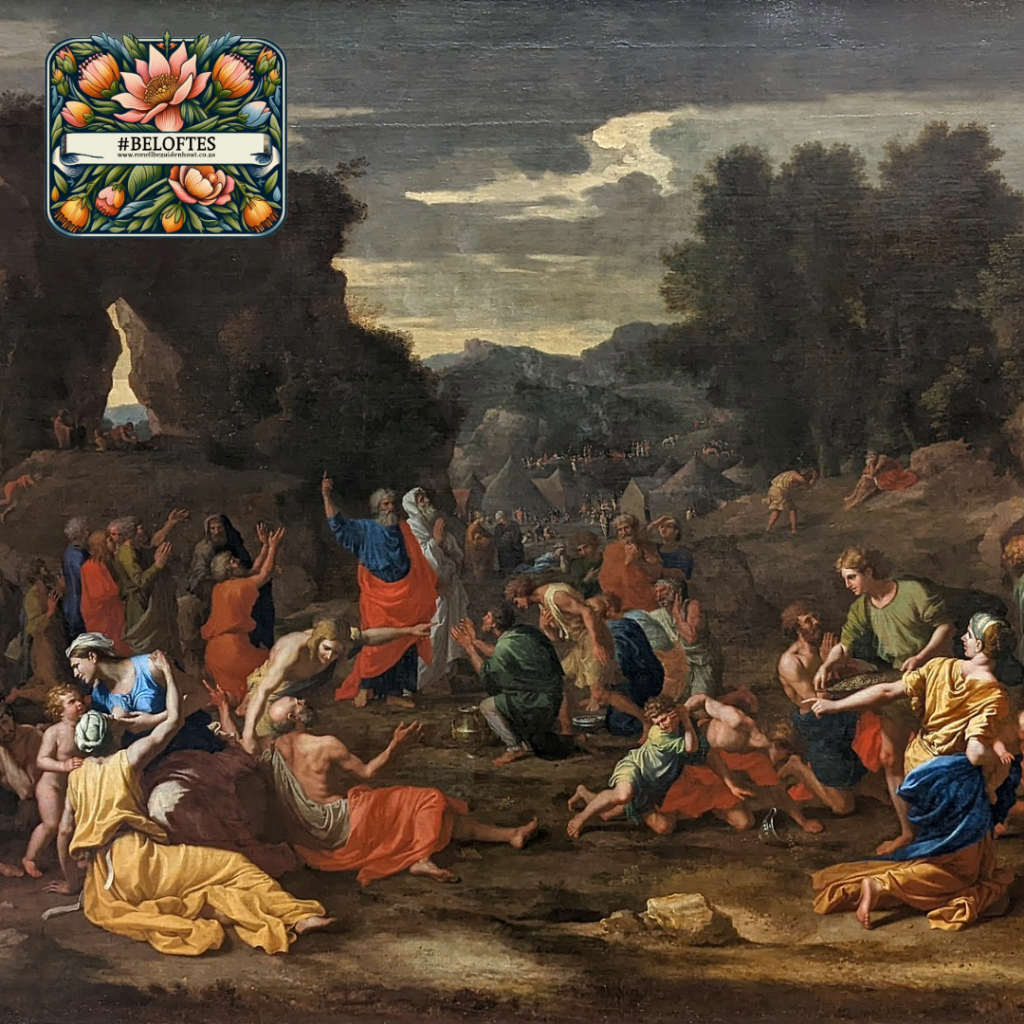
ART: La Manne and Nicolas Poussin
MUSIC:
We’re watching the music video of “Lead, Kindly Light,” the Christian hymn with themes of trust, guidance, and God’s presence in times of uncertainty. It was written in 1833 by John Henry Newman and is performed here by Aled Jones.